Five Ways Contech Companies Can Win the AI Robotics Story
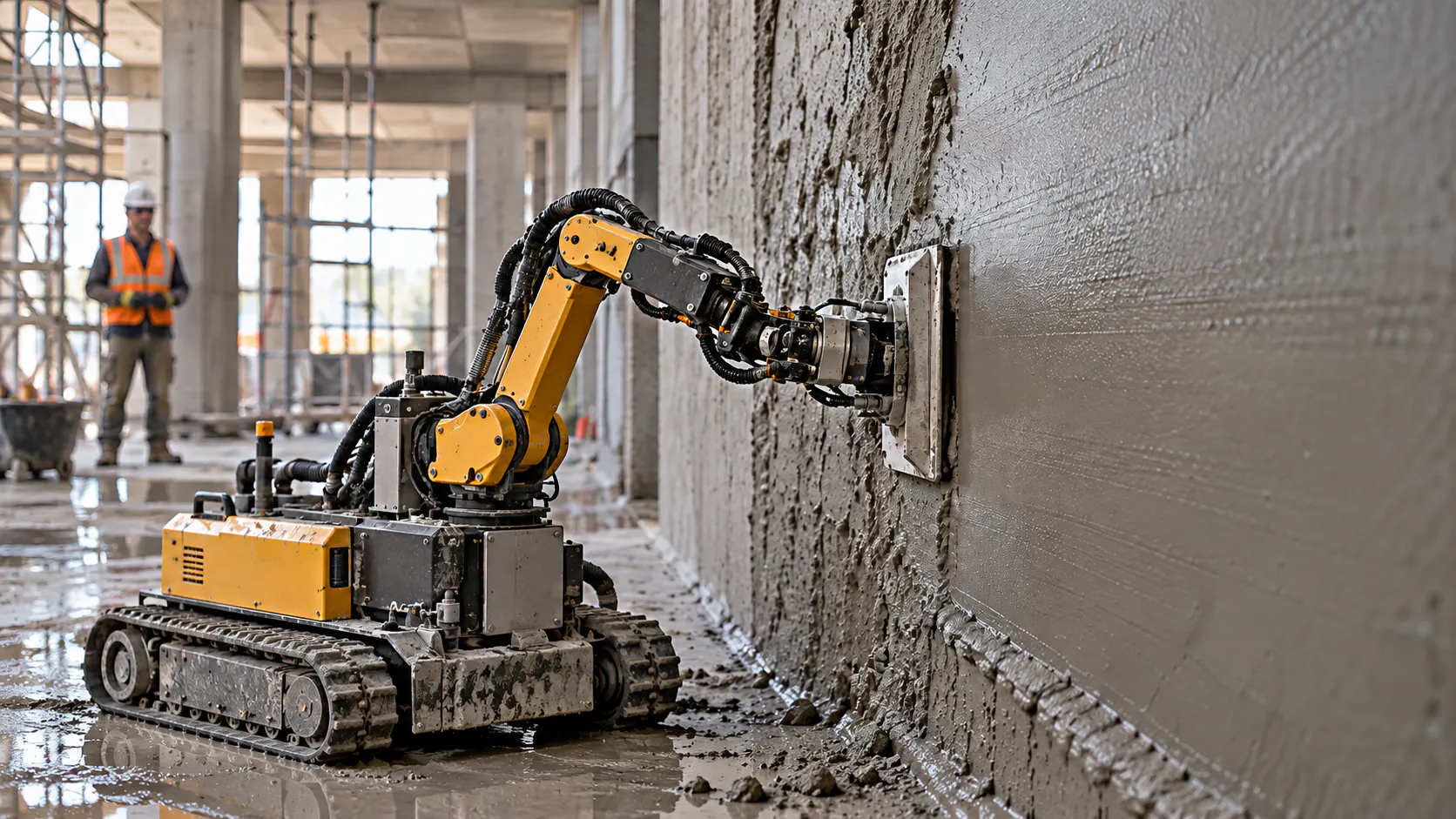
By Nick DerasmoConstruction technology, or Contech, has moved from software on a laptop to machines on the job site. In August, SoftBank backed autonomous-excavator startup Gravis Robotics with a $200 million Series A, following Bedrock Robotics’ $270 million Series B in February. And this month, physical AI company Zinova showed a robot Ziggy taking a single spoken command and building a small concrete wall panel: nailing the wooden form together, drilling, placing and tying steel rebar, and smoothing the poured concrete.
The technology is real, and the money is following it. But capital and a great demo video don’t guarantee trust. Contractors, owners, investors, and the people who actually swing hammers all want to know the same things: Does it work on a real job site? Is it safe? What does it mean for my crew? The construction technology companies that answer those questions clearly, honestly, and early will own the story. Here are five ways to do it.
1. Lead with the Construction Problem, Not the Robot
The most compelling Contech stories start with a problem the industry already feels. Right now, that problem is people: the construction labor shortage. Associated Builders and Contractors estimates the industry needs to attract about 349,000 net new workers in 2026 and 456,000 in 2027 just to keep up with demand.
A robot that helps a contractor finish a warehouse on schedule with the crew they have is a business story. Zinova makes this connection directly: it chose construction as its proving ground because the industry combines chronic skilled-labor shortages with valuable, highly varied physical work. Every announcement, pitch, and executive interview should open with the problem being solved, then introduce the technology as the answer.
2. Skip the Jargon: Explain Physical AI in Plain Language
“Physical AI” means artificial intelligence that runs a machine in the real world, rather than a chatbot on a screen. It’s quickly becoming the category’s defining term. SoftBank’s managing director said physical AI is central to its vision for the next phase of AI when announcing the Gravis investment.
The problem is that most of the audience for construction technology isn’t made up of engineers. A project executive or a lender doesn’t need to hear about vision-language-action models. They need one sentence they can repeat. Zinova’s approach is a good model: rather than building a custom machine for every trade, its Tool Intelligence system teaches one robot to use the same drills, nail guns, and tools human crews already use. That’s a concept anyone on a job site understands immediately. If your explanation needs a diagram to make sense, keep simplifying.
3. Show AND Tell: Real Demos and Honest Timelines for Construction Robots
In construction, seeing is believing. A clear, unedited video of a construction robot completing a recognizable task can drive meaningful attention. Zinova’s demo worked because the task was familiar. It was a scaled-down version of tilt-up construction, where concrete panels are cast flat and craned into place, the way many warehouses and data centers are built.
Just as important is being candid about the stage you’re in. Coverage of that same demo noted that the system is not yet on a live job site. That honesty is an asset, not a weakness. Reporters and buyers in this industry have seen plenty of robotics hype. Companies that clearly separate what’s proven, what’s in pilot, and what’s on the roadmap earn credibility that lasts beyond the first headline.
4. Position Construction Robotics as Supervised Teammates, Not Replacements
One of the questions people are asking search engines and AI tools is some version of “Will robots replace construction workers?” How a Contech company answers it will shape how the whole industry receives its product.
The strongest answer, and the most accurate one, is that these machines extend skilled crews rather than replace them, and that people stay in charge. The industry’s leaders are already framing it this way. Resist the temptation to sell “no humans needed.” Nobody on a job site wants an unsupervised machine. They want to get more done with a crew they trust, with someone accountable for the result.
5. Stand Out with Your Story
Robotics is one of the hottest corners of construction technology. Differentiation comes from a single, clear idea that competitors can’t easily claim. Most construction robots are specialists that do one task very well. Zinova’s idea is the opposite: an intelligence layer that works across different tools, tasks, and robot bodies, so the value isn’t tied to any one machine. Whatever your idea is, name it, repeat it consistently, and back it up with proof. That’s what reporters remember and what investors can explain to their partners.
The Bottom Line for Construction Technology Companies
The money and the machines have arrived. The story hasn’t been claimed yet. The construction technology companies that win the AI robotics story will be the ones that answer the job site’s real questions first: Does it work? Is it safe? What does it mean for my crew?
For more on how AI is changing the way companies get found and talked about, subscribe to Marino’s AI & Digital Marketing Newsletter.
Marino is a New York-based strategic communications agency. We help construction technology, proptech, and real estate companies tell stories that earn trust from customers, investors, and media, and we design, build, and operate AI-powered communications workflows for brands in real estate, proptech, food & beverage, public affairs, and mission-driven work. Let’s talk.